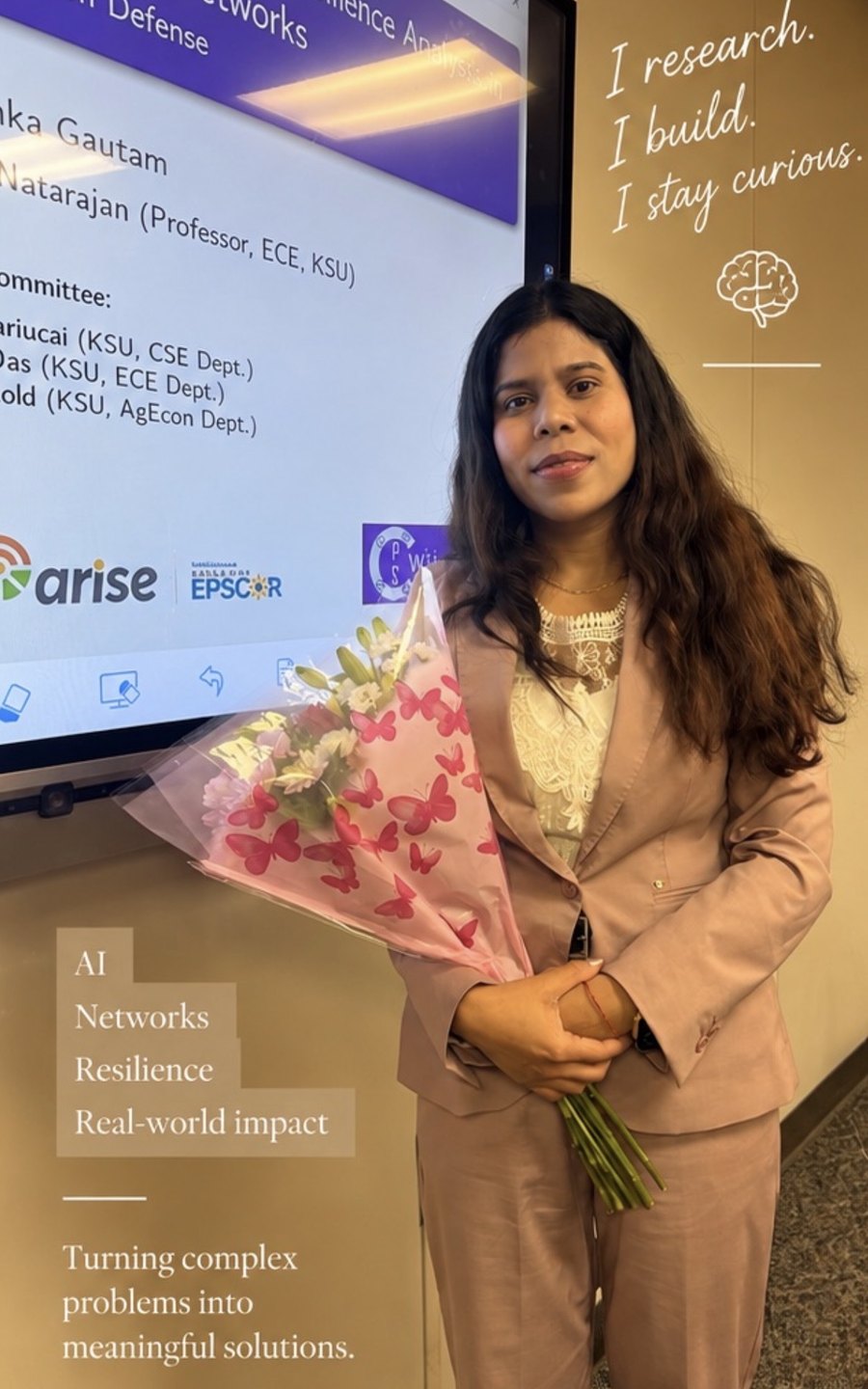
From research to the real world
I research. I build. I stay curious. And one of the questions I get asked most is: what do you actually do all day? Here's my answer, without the equations.
Networks are everywhere
A power grid is a network: power plants, substations, and lines, all connected. So is a city's roads, the internet, and your group of friends on social media. When one part of a network fails, the effects can ripple outward in ways that are hard to predict.
The questions I work on
- Which parts of a network matter most? If a storm knocks out a few pieces of a power grid, which failures would hurt the most people?
- How do things spread through connected people over time? Ideas, information, and influence all move through networks that keep changing.
- How can we tell cause from coincidence? Knowing that two things happen together isn't the same as knowing one causes the other.
Where AI comes in
Networks are too large and complex to analyse by hand. I use machine learning methods designed for connected data, which learn from how things are linked, not just from the things themselves. They help find weak spots quickly, so they can be protected before something goes wrong.
Why it matters
When disasters hit, the systems we depend on, like electricity, water, and communication, need to keep running or recover fast. Research on resilience helps make that possible. That's the part that keeps me going: turning complex problems into meaningful, real-world solutions.
Standing next to my dissertation defense slides was a reminder of how far a curious question can take you. If you've ever wondered whether research is for you, ask me anything.